
The Future of Salt: No Sodium Salts
WELLNESS
Should you consume salt?
Salt has been blamed for decades for everything from raising blood pressure to causing heart attacks. But the body cannot survive without salt. Excess salt is the problem, not the salt itself. So the question isn’t, “should you eat salt?” It’s “how much and what kind?”
Sodium and chloride are the two minerals in table salt which help your body to maintain fluid balance, conduct nerve impulses, regulate muscle contractions, and support stomach acid production for digestion
How Much Sodium Do You Actually Need?
The WHO estimates 1.9 million deaths globally each year can be attributed to eating too much salt.
The WHO recommends consuming no more than less than 2000mg of sodium daily( 5g salt). However people eat on average more than double this, around 4,300mg a day. Most excess sodium doesn’t come from your salt containers, it comes from packaged foods, sauces, and chips.
The Rise of “Smart” Salts and Sodium Alternatives
Salt science is evolving. Today, you’ll see words like “low-sodium”, “lite salt”, or “zero sodium” on store shelves. Here are the main minerals replacing sodium in “smart salts”:
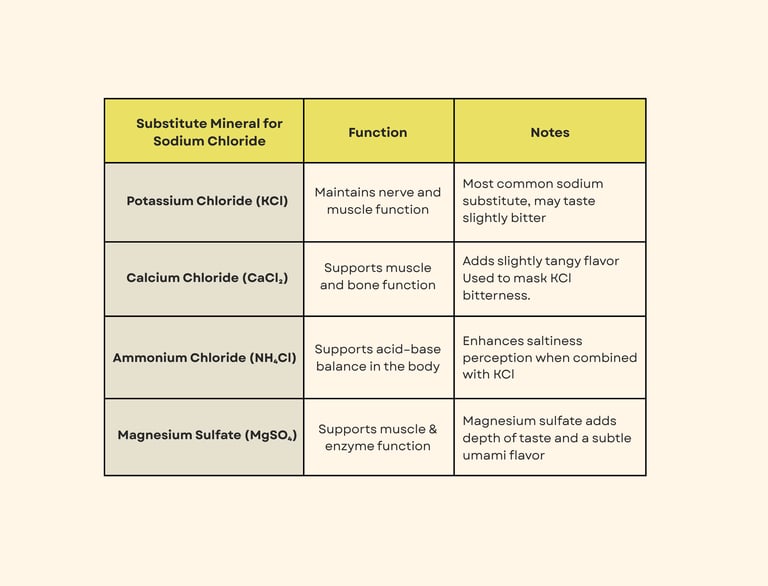
In addition to the above ingredients, following can be present in your salt
Potassium Iodate: A source of iodine added to salt to prevent iodine deficiency which can lead to thyroid dysfunction. It is more stable in humid climates and during cooking, it breaks down into iodine.
Anticaking agents (INS551): It is also referred to as Calcium Silicate. It keeps your salt flowing and not clumping. It doesn't dissolve in water or undergo chemical reactions in food; instead, it simply coats salt crystals to keep them dry. The body doesn’t absorb it; it passes through the digestive tract unchanged.
Lunn 50% Low Sodium Thar Desert Salt
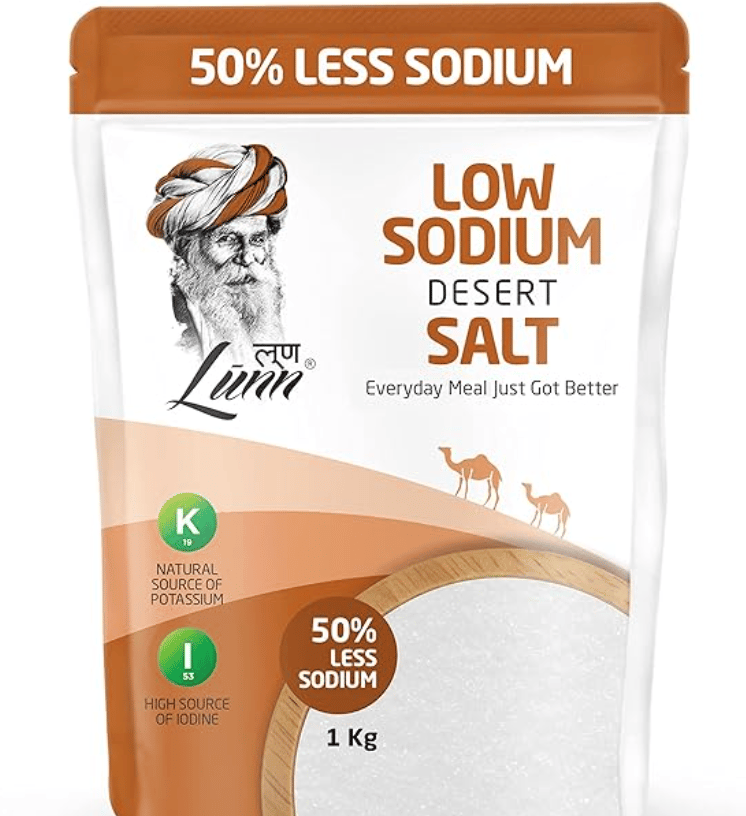
Dessert Salt, Potassium Chloride, Potassium Iodate, Anticaking agents INS 551
Lunn 50% Low Sodium Thar Desert Salt
Ingredients: Dessert Salt (sourced from saline lakes in Thar Dessert), Potassium Chloride, Potassium Iodate, Anticaking agents (INS 551)
So, every 1 gram of this “desert salt” gives roughly: 183 mg sodium and 217 mg potassium
Avoid it: Ideal for most people aiming to reduce sodium intake unless they have kidney disease or are on medication for high blood pressure or heart conditions
Potassium-enriched Salts:
Low-sodium salt is like table salt, but with some sodium replaced with potassium chloride.
Nutri Green Salt
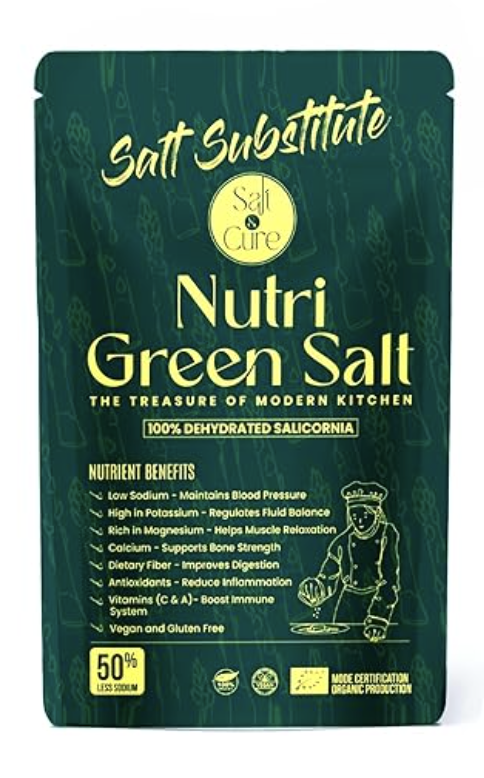
100 % Dehydrated Salicornia
Nutri Green Salt
Ingredients: 100 % Dehydrated Salicornia, a coastal succulent plant that naturally absorbs mineral salts from seawater, including potassium, calcium, and magnesium, but has far less sodium than seawater salt.
So, every 1 gram of this plant-based “Nutri Green Salt” provides roughly 40–80 mg sodium and 100–200 mg potassium. Because it’s plant-derived, sodium content may vary slightly by batch, depending on cultivation and drying.
Avoid it: Generally safe for most people aiming to reduce sodium, but those with thyroid disorders (who rely on iodised salt), or kidney disease should use it cautiously, as it’s not iodised and still contributes trace minerals including potassium.
Tata Super Lite Salt
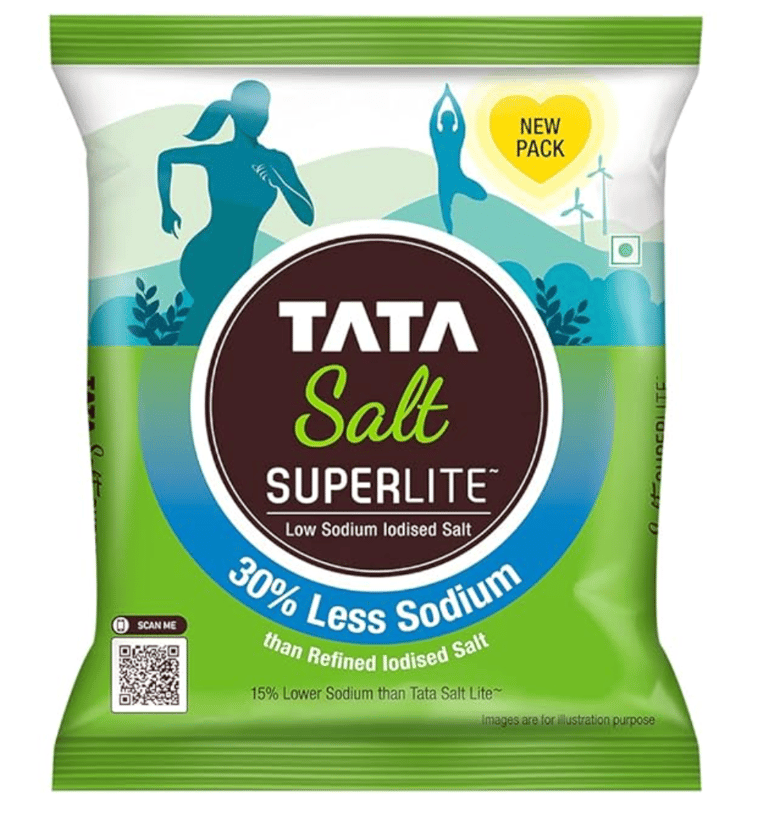
Table Salt, Potassium Chloride, Potassium Iodate, Anticaking agents (INS 551, 536)
Tata Super Lite Salt
Ingredients: Table Salt, Potassium Chloride, Potassium Iodate, Anticaking agents (INS 551, 536)
So, every 1 gram of this “Tata Super Lite Salt” provides roughly 268mg sodium and 156mg potassium.
Avoid it: Generally safe for most people aiming to reduce sodium intake unless they have kidney disease or are on medication for high blood pressure or heart conditions
Lo Salt
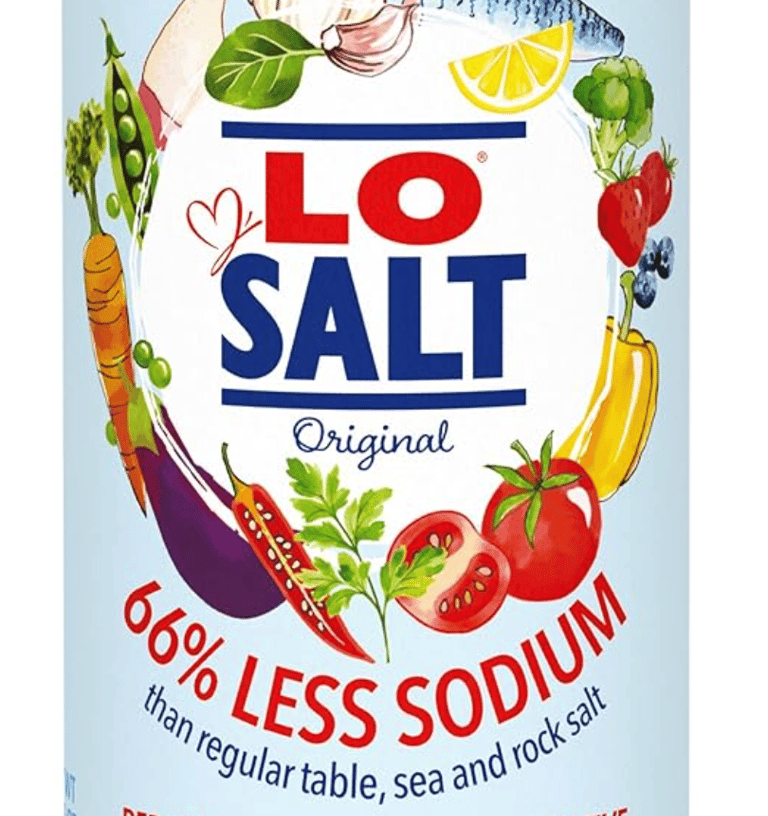
Potassium Chloride, Sodium Chloride, Magnesium Carbonate (anticaking agent)
Lo Salt
Ingredients: Potassium Chloride (66% min.) Sodium Chloride (33% max.) Magnesium Carbonate (anticaking agent)
So, every 1 gram of this “Lo Salt” provides roughly 131mg sodium and 346mg potassium.
Avoid it: Generally safe for most people aiming to reduce sodium intake unless they have kidney disease or are on medication for high blood pressure or heart conditions
Nezo Salt
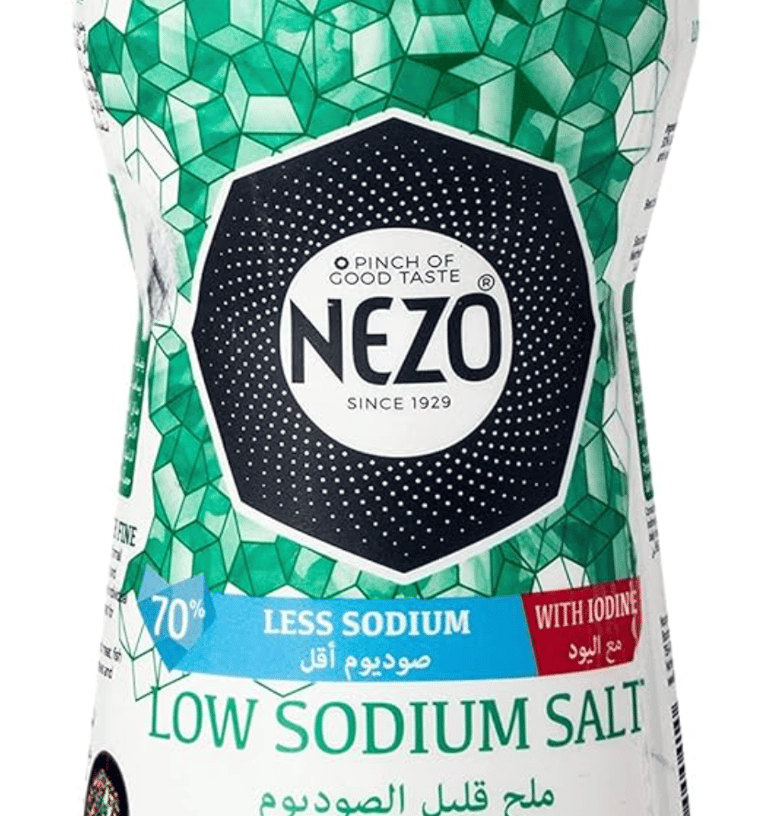
Potassium Chloride (70%) Sodium Chloride (33%) Potassium Iodide, Anticaking agent (E535, ES04)
Nezo Light Salt
Ingredients: Potassium Chloride (70%), Sodium Chloride (33%), Potassium Iodide*, Anticaking agent (E535, ES04)
Avoid it: Generally safe for most people aiming to reduce sodium intake unless they have kidney disease or are on medication for high blood pressure or heart conditions
*Potassium Iodide is less stable, oxidizes easily, loses iodine in heat/humidity. If you are looking for iodised salt its best to look for something with Potassium Iodate that is more stable and survives cooking. This product is from Holland (Netherlands). Many European countries use KI in iodized salt because of cooler climate, lower humidity and heat exposure in cooking.
Saxa So Low Salt
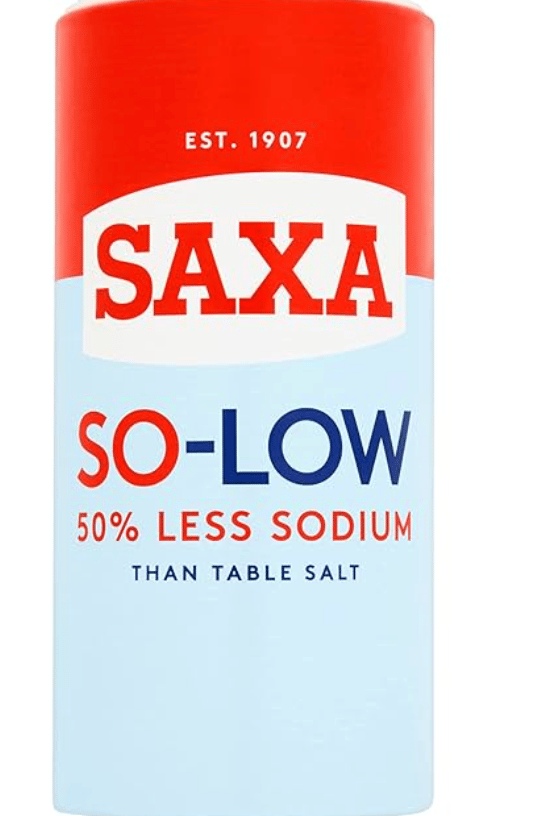
Potassium Chloride (51%) and Salt (48%), Anti-caking Agents (magnesium carbonate, potassium hexacyanoferrate II, and sodium hexacyanoferrate II)
Saxa So Low Salt
Ingredients: Potassium Chloride (51%) and Salt (48%), Anti-caking Agents (magnesium carbonate, potassium hexacyanoferrate II, and sodium hexacyanoferrate II)
So, every 1 gram of this “Saxa So Low Salt” provides roughly 190mg sodium and 270mg potassium.
Avoid it: Generally safe for most people aiming to reduce sodium intake unless they have kidney disease or are on medication for high blood pressure or heart conditions
Other salts that are marketed as low-sodium alternatives like kosher, pink Himalayan, and sea salt contain almost the same amount of sodium. They have larger crystals and may feel “lighter,” but you usually end up using the same amount by weight to get the same salty taste. So the actual sodium you consume ends up being very similar. As a rule of thumb irrespective of the type of salt you use, its essential to lower the intake of sodium. These salts contain trace minerals like calcium, potassium, magnesium, and iodine that may offer very tiny nutritional benefits, but the amounts are too small to meaningfully impact health. So while these salts can add flavor and variety, they shouldn’t be viewed as healthier just because they’re “natural” The real win for your heart, kidneys, and blood pressure is managing total sodium intake, not switching salt types.
Iodised salt contain sodium chloride along with potassium iodate to prevent iodine deficiency. People who consume dairy products like eggs, milk and seafood like fish, naturally get iodine through their diet so its not necessary to use iodised salt to meet the requirement.
*Disclaimer: This post contains Amazon affiliate links. As an Amazon Associate, I may earn a commission from qualifying purchases at no extra cost to you. There is no intention to defame any brand. Everything shared in this blog is a personal opinion and purely for educational purposes. I do not own the copyright for any logos shown. This post is not sponsored and does not include any paid promotion. The images shown are for reference purposes only and can change based on company policies and promotions.
Related Stories
Gut Brain Code © 2025
Gut Brain Code empowers the generation of current and tomorrow for a brighter future with hope for every individual.
Follow Us